Patients experience significant changes in gut bacteria at the onset of inflammatory bowel disease (IBD), a new international study has found - offering new hope for earlier diagnosis and future treatments.
For millions suffering from chronic inflammatory diseases like inflammatory bowel disease (IBD), managing flare-ups often involves powerful drugs with significant side effects.
Pain perception in affected individuals is more strongly influenced by learned fear than in healthy individuals. Changes along the gut-brain axis related to chronic inflammation may explain this.
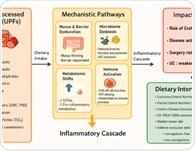
This narrative review synthesizes evidence showing that higher intake of ultra-processed foods is consistently associated with increased Crohn’s disease risk, with mechanistic pathways implicating emulsifiers, carrageenan, maltodextrin, titanium dioxide, sweeteners and salt. It also highlights that minimally processed dietary strategies, including EEN and CDED, show therapeutic promise, particularly in pediatric Crohn’s disease.
A team led by clinicians and engineers has wrapped the plant-derived polyphenol pterostilbene (PSB) into prebiotic alginate/resistant-starch microcapsules coated with chitosan and shown that oral administration dampens dextran-sulfate-sodium (DSS) colitis in mice.
Why did you receive this email?
You are receiving this email because you subscribed to updates from AZoNetwork UK Ltd. on one of
our websites
and requested to be notified of additional information.