Introduction
The role of sulfur in health
Key dietary sources of sulfur
How does sulfur prevent aging?
Garlic-specific evidence
Brassicas and cancer prevention
Practical guidance
Dietary combinations to enhance absorption
References
Further reading
From garlic allicin to broccoli sulforaphane, discover how dietary sulfur compounds switch on the body’s core repair systems and shape long-term resilience against aging and disease.
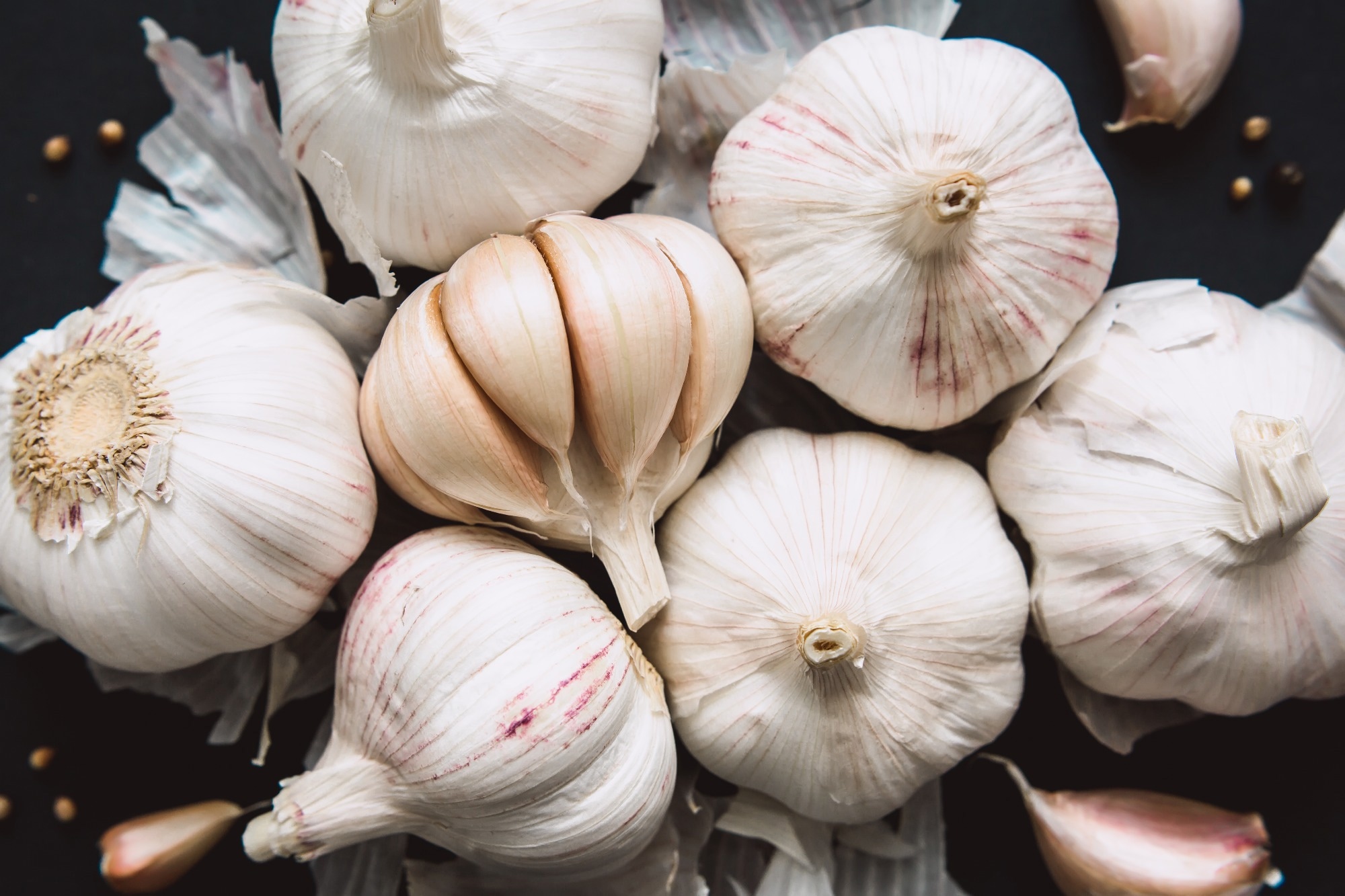 Image Credit: Ekaterina Bondaretc / Shutterstock.com
Introduction
This article discusses the importance of sulfur for various physiological processes, including nuclear factor erythroid 2-related factor 2 (Nrf2) activation and hydrogen sulfide (H₂S) signaling, while offering practical ways to maximize allicin and sulforaphane intake for healthy aging.
The role of sulfur in health
As the primary source of cysteine for glutathione (GSH), sulfur is an essential element involved in the detoxification of reactive oxygen species and the conjugation of xenobiotics. In proteins, sulfur-containing residues enable catalysis, redox sensing, and structural regulation.
Sulfur-containing amino acids (SAAs) like cysteine and methionine form disulfide bonds and undergo reversible S-glutathionylation, S-nitrosylation, and S-persulfidation that contribute to peroxidase, dehydroascorbate reductase, and transcription factor activity, thereby stabilizing the glutathione-to-glutathione disulfide (GSSG) redox couple. SAAs also support protein folding, repair oxidized targets, and rebuild damaged macromolecules, sustaining resilience under oxidative or metal stress.1,2
Key dietary sources of sulfur
Garlic, onions, and leeks are alliaceous vegetables rich in organosulfur compounds such as cysteine sulfoxides and their enzymatic breakdown products. Cruciferous vegetables like broccoli, kale, and cauliflower contain high levels of glucosinolates, whose concentration varies widely by species, cultivar, tissue, and processing rather than constituting a fixed percentage of total dry weight.3,6
Researchers have identified various organosulfur compounds in fish, chicken, and minced beef. Eggs, pasta, and rice primarily provide sulfur in the form of SAAs. Chicken, beef, and fish exhibit similarly high levels of SAA, with proportions ranging from 74% to 97%.3
Inorganic sulphate can also be found in tap water, with concentrations varying globally. Whereas the Netherlands reports levels below 260 mg/L, higher levels of up to 22 mmol/L have been measured in parts of central Canada.3
How does sulfur prevent aging?
H2S functions as a gasotransmitter that supports longevity through its role in mitochondrial respiration, redox signaling, and stress adaptation. By modulating mitochondrial electron transport and preserving thiol redox balance, H2S enhances stress resistance and maintains proteostasis during aging.4
Nrf2 binds antioxidant response elements (AREs) and induces phase II detoxification enzymes, including glutathione S transferases (GSTs), nicotinamide adenine dinucleotide (phosphate) hydrogen [NAD(P)H] quinone oxidoreductase 1 (NQO1), heme oxygenase 1 (HO-1), and enzymes for GSH synthesis. This limits oxidative damage, sustains redox homeostasis, and protects long-lived tissues.4
GSH and thioredoxin (Trx) directly neutralize electrophiles and recycle oxidized proteins. Cysteine-rich dietary isothiocyanates also attenuate nuclear factor kappa B (NF-κB) signaling and inflammasome activation, thereby lowering chronic inflammation that accelerates biological aging.4,6
Sulfur metabolism stabilizes one-carbon flux and S-adenosylmethionine (SAM) availability for DNA and histone methylation. Protein persulfidation further protects catalytic cysteine residues from irreversible oxidation, preserving enzyme function under stress conditions.2
Garlic-specific evidence
Crushing fresh garlic converts S-allyl-L-cysteine sulfoxide (alliin) to allicin through the enzyme alliinase. Allicin is transient and rearranges into organosulfur compounds such as diallyl disulfide, diallyl trisulfide, ajoene, and dithiins, with concentrations varying by preparation method, including powders, oils, or aged extracts.7
Cardiovascular evidence suggests that garlic derivatives can reduce low-density lipoprotein cholesterol and blood pressure, inhibit platelet aggregation, and attenuate early atherogenic processes. Garlic-derived compounds have also been shown to reduce vascular inflammation markers, such as vascular cell adhesion molecule-1 (VCAM-1), in vivo; however, clinical outcomes remain heterogeneous across trials.5,7
Garlic compounds modulate cytokine profiles, often decreasing tumor necrosis factor-α (TNF-α) and interleukin-6 (IL-6), while increasing interleukin-10 (IL-10). Enhanced activity of natural killer cells and γδ T cells can support mucosal immunity and secretory immunoglobulin A (IgA) responses.5
Allicin and related thiosulfinates exhibit broad antibacterial and antiparasitic actions. In vivo, allicin supports host defense by promoting macrophage activation and interferon-γ (IFN-γ) signaling.5
Brassicas and cancer prevention
Brassica vegetables like broccoli, kale, and cabbage are rich in glucosinolates that, upon tissue disruption, convert to sulforaphane from glucoraphanin and indole-3-carbinol from glucobrassicin. Sulforaphane activates Nrf2, inducing detoxification enzymes such as glutathione S-transferases and NAD(P)H:quinone oxidoreductase 1.6
Sulforaphane also inhibits histone deacetylases, promotes cell cycle arrest and apoptosis, and suppresses NF-κB signaling. Indole-3-carbinol forms diindolylmethane in the stomach, activates the aryl hydrocarbon receptor, shifts estrogen metabolism toward 2-hydroxylation, and induces cytochrome P450 1A1.6
In vitro studies report anti-cancer effects of sulforaphane and indole-3-carbinol, including suppression of proliferation and enhancement of apoptosis. In rodents, broccoli sprouts or purified isothiocyanates reduce carcinogen-induced tumor burden across multiple tissues and decrease polyp formation in adenomatous polyposis coli multiple intestinal neoplasia (ApcMin) models.
In clinical trials, consumption of broccoli sprout beverages increased urinary excretion of airborne toxin conjugates and supported glutathione S-transferase activity. Higher crucifer intake correlates with reduced risk of colorectal, lung, and prostate cancer, although effect sizes vary by population and genetic background.6
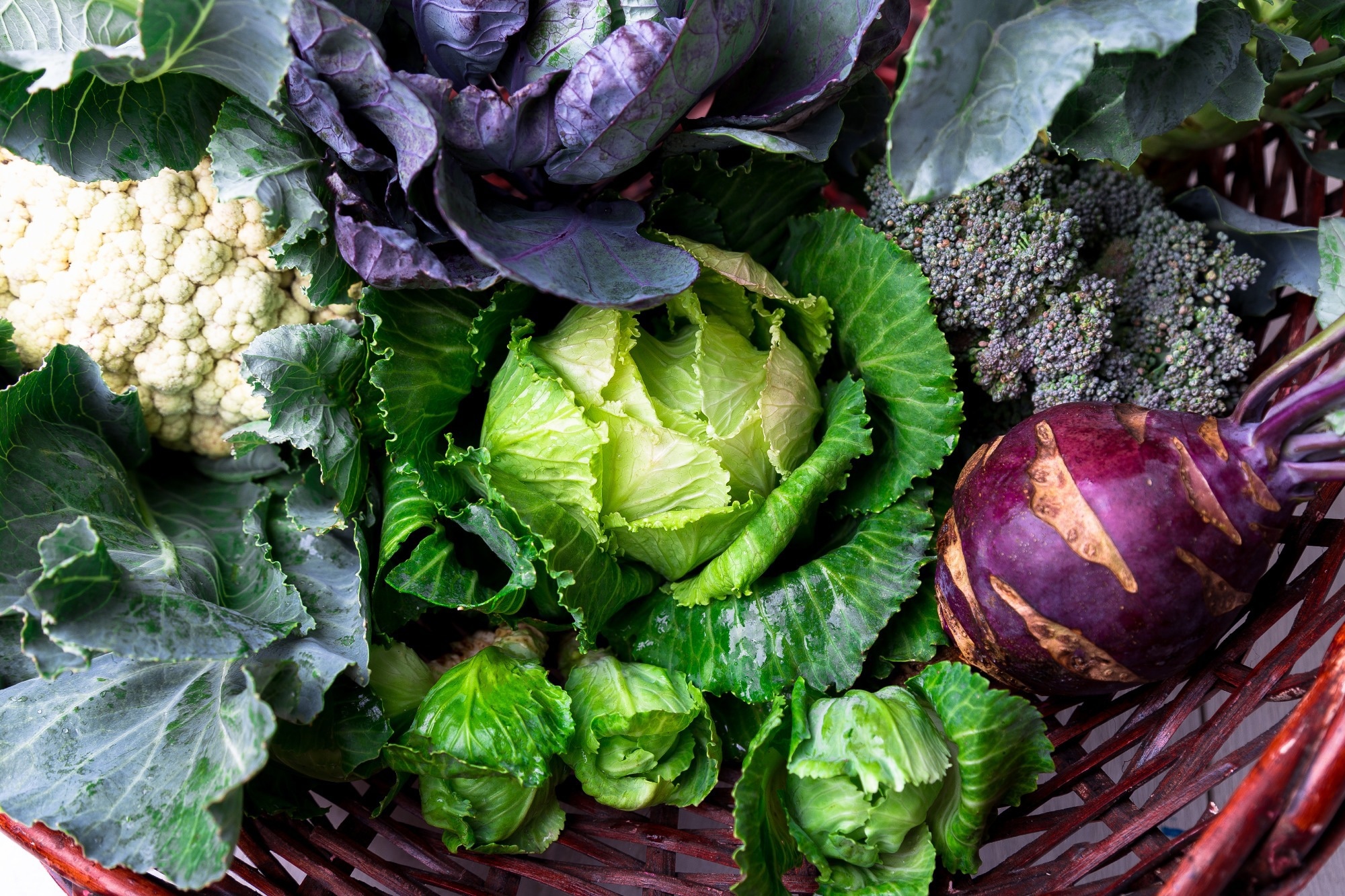 Image Credit: Bondar Illia / Shutterstock.com
Practical guidance
To maximize allicin formation, fresh garlic should be crushed, minced, or grated to allow alliinase activation before heating. Heating intact cloves first inactivates alliinase and prevents allicin generation.
When cooking, lightly crushed garlic should be exposed only to moderate heat for short durations, as prolonged heating beyond approximately 10 minutes reduces bioactivity. Adding garlic toward the end of cooking or off heat helps preserve sulfur compounds. Pre-crushed garlic gently warmed in oil favors ajoene formation, whereas higher temperatures shift products toward allyl sulfides.7
Acidic pickling inhibits alliinase while producing minimal allicin. Aged garlic extract provides stable, water-soluble sulfur compounds such as S-allyl cysteine with favorable bioavailability.7
Dietary combinations to enhance absorption
Preparations that preserve plant enzymes maximize the production of bioactive sulfur metabolites. For crucifers, boiling, frying, blanching, and high-power microwaving reduce glucosinolates, whereas steaming better preserves myrosinase activity.
Allowing endogenous myrosinase to act increases conversion of glucosinolates to isothiocyanates. Raw crucifers or sprouts yield higher sulforaphane exposure than myrosinase-free supplements, although gut microbial β-thioglucosidases can partially compensate for enzyme loss.
Finely chopping allium vegetables activates alliinase, rapidly generating allicin and downstream sulfides. High-temperature processing significantly decreases organosulfur bioavailability, emphasizing the value of low-heat and minimal-water techniques.8
References
- Noctor, G., Mhamdi, A., Chaouch, S., et al. (2012). Glutathione in plants: an integrated overview. Plant, Cell & Environment 35(2). 454-484. DOI: 10.1199/tab.0142. https://bioone.org/journals/the-arabidopsis-book/volume-2011/issue-9/tab.0142/Glutathione/10.1199/tab.0142.full
- De Bont, L., Donnay, N., Couturier, J., & Rouhier, N. (2022). Redox regulation of enzymes involved in sulfate assimilation and in the synthesis of sulfur-containing amino acids and glutathione in plants. Frontiers in Plant Science 13. DOI: 10.3389/fpls.2022.958490. https://www.frontiersin.org/journals/plant-science/articles/10.3389/fpls.2022.958490/full
- Doleman, J. F., Grisar, K., Van Liedekerke, L., et al. (2017). The contribution of alliaceous and cruciferous vegetables to dietary sulphur intake. Food Chemistry 234; 38-45. DOI: 10.1016/j.foodchem.2017.04.098. https://www.sciencedirect.com/science/article/pii/S0308814617306672?via%3Dihub
- Sykiotis, G. P., Habeos, I. G., Samuelson, A. V., & Bohmann, D. (2011). The role of the antioxidant and longevity-promoting Nrf2 pathway in metabolic regulation. Current Opinion in Clinical Nutrition & Metabolic Care 14(1); 41-48. DOI: 10.1097/MCO.0b013e32834136f2. https://journals.lww.com/co-clinicalnutrition/abstract/2011/01000/the_role_of_the_antioxidant_and.8.aspx
- Arreola, R., Quintero-Fabián, S., López-Roa, R. I., et al. (2015). Immunomodulation and anti‐inflammatory effects of garlic compounds. Journal of Immunology Research. DOI: 10.1155/2015/401630. https://onlinelibrary.wiley.com/doi/10.1155/2015/401630
- Costa-Pérez, A., Núñez-Gómez, V., Baenas, N., et al. (2023). Systematic Review on the Metabolic Interest of Glucosinolates and Their Bioactive Derivatives for Human Health. Nutrients 15(6). DOI: 10.3390/nu15061424. https://www.mdpi.com/2072-6643/15/6/1424
- Seki, T., & Hosono, T. (2025). Functionality of garlic sulfur compounds. Biomedical Reports 23(2). DOI: 10.3892/br.2025.2002. https://www.spandidos-publications.com/10.3892/br.2025.2002#
- Miękus, N., Marszałek, K., Podlacha, M., et al. (2020). Health Benefits of Plant-Derived Sulfur Compounds, Glucosinolates, and Organosulfur Compounds. Molecules 25(17). DOI: 10.3390/molecules25173804. https://www.mdpi.com/1420-3049/25/17/3804
Further Reading
Last Updated: Jan 4, 2026
 Insect flour could boost gut health and cut environmental impact