2. What should I know before I use Vagifem® Low?
Do not use if you have ever had an allergic reaction to Vagifem® Low or any of the
ingredients listed at the end of the CMI.
Talk to your doctor if you have any other medical conditions, take any other medicines,
or are pregnant or plan to become pregnant or are breastfeeding.
3. What if I am taking other medicines?
Some medicines may interfere with Vagifem® Low and affect how it works.
4. How do I use Vagifem® Low?
Use one Vagifem® Low pessary each day for the first two weeks, then one pessary twice
a week (allowing three to four days between doses e.g. Monday and Friday).
Always use Vagifem® Low exactly as your doctor has instructed you to. Check with our
doctor or pharmacist if you are unsure.
5. What should I know while using Vagifem® Low?
|
Things you should do
|
Remind any doctor, dentist or pharmacist you visit that you are using Vagifem® Low.
Keep all of you doctor's appointments so that you can be monitored.
|
|
Things you should not do
|
Do not give this medicine to anyone else.
Do not swallow Vagifem® Low. These modified release pessaries are for vaginal use
only.
|
|
Driving or using machines
|
There is no specific information on driving or using machines while you are using
Vagifem® Low
|
|
Drinking alcohol
|
There is no specific information on the effect of drinking alcohol while you are using
Vagifem® Low
|
|
Looking after your medicine
|
Vagifem® Low should be kept in a cool dry place where the temperature stays below
25°C.
|
6. Are there any side effects?
Common side effects may include genital rash, discomfort and infection (thrush).
Serious side effects may include the potential for blood clots (in veins, lungs or
brain), severe allergic reaction (anaphylaxis), sudden onset headache or migraine,
changes to breasts suggestive of breast cancer, unexpected vaginal bleeding, yellowing
of the skin and eyes (jaundice or other liver problem).
Active ingredient:
estradiol hemihydrate
Full Consumer Medicine Information (CMI)
This leaflet provides important information about using Vagifem® Low. You should also speak to your doctor or pharmacist if you would like further information
or if you have any concerns or questions about using Vagifem® Low.
Where to find information in this leaflet:
1. Why am I using Vagifem® Low?
Vagifem® Low contains the active ingredient estradiol hemihydrate. Vagifem® Low is a local hormone replacement therapy (HRT).
The estradiol in Vagifem® Low is identical to the estradiol produced in the ovaries
of women, and is classified as a natural estrogen.
Vagifem® Low is used to treat a condition called atrophic vaginitis due to a reduction
of estrogen, which occurs around menopause.
The symptoms include dryness and irritation in the vagina, and pain during sexual
intercourse.
2. What should I know before I use Vagifem® Low?
Medical history and regular check-ups
The use of HRT carries risks which need to be considered when deciding whether to
start taking it, or whether to carry on taking it.
Before you start (or restart) HRT, your doctor will ask about your own and your family's
medical history. Your doctor may decide to perform a physical examination. This may
include an examination of your breasts and/or internal examination, if necessary.
Once you've started on Vagifem® Low, you should see your doctor for regular check-ups
(3-6 months after starting Vagifem® Low, and at least once a year thereafter).
Go for regular breast screening.
Vagifem® Low, different from HRT tablets or patches, is for local treatment in the
vagina, and the absorption into the blood is low.
Warnings
Do not use Vagifem® Low if:
you have, suspect having, or have ever had, breast cancer
you have, suspect having, or have had, cancer which is sensitive to estrogens, such
as cancer of the lining of the uterus (endometrium)
you have any unexplained vaginal bleeding
you have excessive thickening of the lining of the uterus (endometrial hyperplasia)
that is not being treated
you have or have ever had a blood clot in a vein (thrombosis), such as in the legs
(deep venous thrombosis) or the lungs (pulmonary embolism)
you have a blood clotting disorder (such as protein C, protein S or antithrombin deficiency)
you have or have previously had a disease caused by blood clots in the arteries, such
as a heart attack, stroke or angina
you have or have ever had a liver disease and your liver function tests have not returned
to normal
you have a rare blood problem called 'porphyria', which is passed down in families
(inherited)
you are pregnant or suspect you may be pregnant, or you are breast-feeding
you are allergic to estradiol or any of the other ingredients listed at the end of
this leaflet.
Always check the ingredients to make sure you can use this medicine.
Vagifem® Low should not be used in children or by males.
Check with your doctor if you:
have asthma
have epilepsy
have diabetes
have gallstones
have high blood pressure
have migraines or severe headaches
have a liver disorder, such as a benign liver tumour
have fibroids or a growth of the uterine lining outside your uterus (endometriosis)
have a history of excessive growth of the uterine lining (endometrial hyperplasia)
have otosclerosis (a disease affecting the eardrum and hearing)
have systemic lupus erythematosus, SLE (a disease of the immune system that affects
many organs of the body
have an increased risk of getting an estrogen-sensitive cancer (such as having a mother,
sister or grandmother who has had breast cancer)
have an increased risk of developing blood clots (see 'Blood clots in a vein (venous thromboembolism))
have a very high level of fat in your blood (triglycerides)
have hereditary or acquired angioedema
have fluid retention due to cardiac or kidney problems
have any other medical conditions
take any medicines for any other condition.
Vaginal infections should be treated before Vagifem® Low is used.
HRT and cancer risk
Endometrial hyperplasia and cancer
Taking estrogen-only HRT tablets for a long time can increase the risk of developing
cancer of the uterine lining (the endometrium). It is uncertain whether long term
(more than one year) or repeated use of local vaginally administered estrogen products
possess a similar risk.
In women who still have a uterus and who are not taking HRT, on average, 5 in 1,000
will be diagnosed with endometrial cancer between the ages of 50 and 65.
For women aged 50 to 65 who still have a uterus and who take estrogen-only HRT, between
10 and 60 women in 1,000 will be diagnosed with endometrial cancer, depending on the
dose and for how long it is taken.
Irregular bleeding
If you get breakthrough bleeding or spotting, you should make an appointment to see
your doctor. It could be a sign that your endometrium has become thicker.
Breast cancer
Evidence suggests that using Vagifem® Low does not increase the risk of breast cancer
in women who have not had breast cancer in the past. It is not known if Vagifem® Low
can be safely used in women who have had breast cancer in the past.
Ovarian cancer
Ovarian cancer is rare – much rarer than breast cancer. The use of estrogen-only or
combined estrogen-progestogen HRT has been associated with a slightly increased risk
of ovarian cancer.
Blood clots in a vein (venous thromboembolism)
The risk of blood clots in the veins is about 1.3 to 3 times higher in HRT users than
in non-users, especially during the first year of taking it.
Blood clots can be serious, and if one travels to the lungs, it can cause chest pain,
breathlessness, fainting or even death.
Inform your doctor if any of these risks apply to you:
you are unable to walk for a long time because of major surgery, injury or illness
you have had one or more miscarriages
you are overweight or obese (BMI >30 kg/m²)
you have any blood clotting problem that needs long-term treatment with a medicine
used to prevent blood clots
if any of your close relatives has ever had a blood clot in the leg, lung or another
organ
you have systemic lupus erythematosus (SLE)
you have cancer.
Heart disease (heart attack)
There is no evidence that HRT will prevent a heart attack.
Women over the age of 60 years who use estrogen-progestogen HRT are slightly more
likely to develop heart disease than those not taking any HRT.
Stroke
The risk of having as stroke is about 1.5 times higher in HRT users than in non-users.
The number of extra cases of stroke due to use of HRT will increase with age.
Other things that can increase the risk of stroke include:
high blood pressure
smoking
drinking too much alcohol
an irregular heartbeat.
Other conditions
HRT will not prevent memory loss. There is some evidence of a higher risk of memory
loss in women who start using HRT after the age of 65.
During treatment, you may be at risk of developing certain side effects. It is important
you understand these risks and how to monitor for them. See additional information
under Section
6. Are there any side effects?
Pregnancy and breastfeeding
Do not use Vagifem® Low if you are pregnant or suspect you are pregnant.
Do not use Vagifem® Low if you are breastfeeding.
3. What if I am taking other medicines?
Tell your doctor or pharmacist if you are taking any other medicines, including any
medicines, vitamins or supplements that you buy without a prescription from your pharmacy,
supermarket or health food shop.
Vagifem® Low contains a very small amount of hormone which should not interact with
other medicines you are using.
Check with your doctor or pharmacist if you are not sure about what medicines, vitamins
or supplements you are taking and if these affect Vagifem® Low.
4. How do I use Vagifem® Low?
How much to use
Use one Vagifem® Low pessary each day for the first two weeks, then one pessary twice
a week (allowing three to four days between doses e.g. Monday and Friday).
Your doctor will tell you how long you should use Vagifem® Low.
Vagifem® Low treatment should not affect your normal hygiene routine or lifestyle.
Vagifem® Low is suitable for women who have had their uterus removed (have had a hysterectomy),
as well as for those who have not.
How to use Vagifem® Low
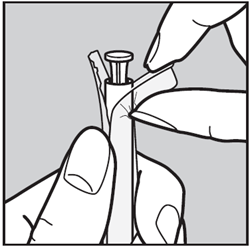
1. Wash hands well. Tear off one single blister pack. Open the end as shown in the picture.
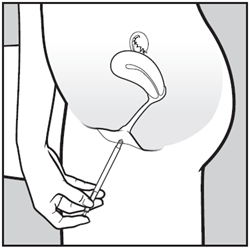
2. Insert the applicator carefully into the vagina. Stop when you can feel some resistance
(8-10 cm).
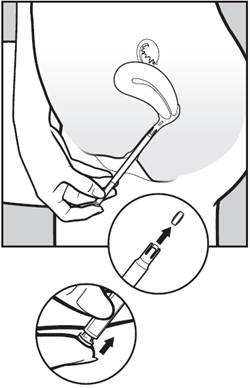
3. To release the pessary, gently press the push button until you feel a click. The pessary
will stick to the wall of the vagina straight away. It will not fall out if you stand
up or walk.
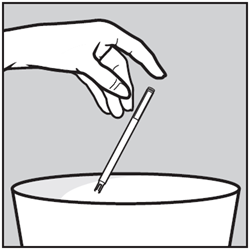
4. Take out the applicator and throw it away.
If you forget to use Vagifem® Low
Vagifem® Low pessaries should be used regularly. If you forget to use your pessary
at the usual time, insert it as soon as you remember.
If it is almost time for your next dose, skip the dose you missed and use your next
dose when you are meant to.
Do not use a double dose to make up for the dose you missed.
If you use too much Vagifem® Low
If you think that you or anyone else have used too much Vagifem® Low, you may need
medical attention.
You should:
phone the Poisons Information Centre
(by calling
13 11 26), or
contact your doctor, or
go to the Emergency Department at your nearest hospital.
You should do this even if there are no signs of discomfort or poisoning.
5. What should I know while using Vagifem® Low?
You can expect your symptoms to improve within a few weeks of starting Vagifem® Low.
Vagifem® Low can be stopped at any time. You should discuss this with your doctor.
Vagifem® Low is not a contraceptive and will not prevent pregnancy.
If you have any concerns about using Vagifem® Low, ask your doctor or pharmacist.
Used applicators may be returned to the open blister packs and then discarded in the
garbage carefully.
Things you should do
Regularly check your breasts.
See your doctor if you notice any changes such as:
dimpling of the skin
changes in the nipple
any lumps you can see or feel.
Additionally, you are advised to join mammography screening programs when offered
to you. For mammogram screening, it is important that you inform the nurse/healthcare
professional who is actually taking the x-ray that you use HRT, as this medication
may increase the density of your breasts which may affect the outcome of the mammogram.
Where the density of the breast is increased, mammography may not detect all lumps.
Remind any doctor, dentist or pharmacist you visit that you are using Vagifem® Low.
Things you should not do
Do not give this medicine to anyone else even if they seem to have the same symptoms
as you.
Do not use Vagifem® Low to treat any other complaints unless your doctor tells you
to.
Do not change the way you use Vagifem® Low, or change the number of pessaries per
week, without checking with your doctor.
Do not swallow Vagifem® Low. These modified release pessaries are for vaginal use
only.
Driving or using machines
There is no specific information on driving or using machines while you are using
Vagifem® Low.
Drinking alcohol
There is no specific information on the effect of drinking alcohol while you are using
Vagifem® Low.
Looking after your medicine
Follow the instructions in the carton on how to take care of your medicine properly.
Store it in a cool dry place away from moisture, heat or sunlight, where the temperature
stays below 25°C; for example, do not store it:
in the bathroom or near a sink, or
in the car or on window sills.
Do not put Vagifem® Low in the refrigerator.
Keep Vagifem® Low in the outer carton in order to protect from light.
Keep it where young children cannot reach it.
When to discard your medicine
Discard all medicine if it is after the expiry date printed on the pack. The expiry
date refers to the last day of that month.
Do not use your medicine if the packaging is torn or shows signs of tampering.
Getting rid of any unwanted medicine
If you no longer need to use this medicine or it is out of date, take it to any pharmacy
for safe disposal.
6. Are there any side effects?
All medicines can have side effects. If you do experience any side effects, most of
them are minor and temporary. However, some side effects may need medical attention.
See the information below and, if you need to, ask your doctor or pharmacist if you
have any further questions about side effects.
Less serious side effects
Serious side effects
Tell your doctor or pharmacist if you notice anything else that may be making you
feel unwell.
Other side effects not listed here may occur in some people.
Reporting side effects
After you have received medical advice for any side effects you experience, you can
report side effects to the Therapeutic Goods Administration online at
www.tga.gov.au/reporting-problems . By reporting side effects, you can help provide more information on the safety of
this medicine.
Always make sure you speak to your doctor or pharmacist before you decide to stop
taking any of your medicines.
7. Product details
This medicine is only available with a doctor's prescription.
What Vagifem® Low contains
|
Active ingredient
(main ingredient)
|
estradiol (as hemihydrate) 10 micrograms
|
|
Other ingredients
(inactive ingredients)
|
hypromellose
lactose monohydrate
maize starch
magnesium stearate
macrogol 6000
|
|
Potential allergens
|
lactose monohydrate
|
Do not take this medicine if you are allergic to any of these ingredients.
What Vagifem® Low looks like
Vagifem® Low modified release pessaries are white and round and marked on one side
with 'NOVO 278'.
The pessaries are inset in a single use, disposable applicator.
Vagifem® Low is supplied in:
6 packs - 1 blister pack containing 6 applicators with inset modified release pessaries
8 packs - 2 blister packs each containing 4 applicators with inset modified release
pessaries
18 packs - 3 blister packs each containing 6 applicators with inset modified release
pessaries
24 packs - 4 blister packs each containing 6 applicators with inset modified release
pessaries.
AUST R 163054
Not all pack sizes may be marketed.
Who distributes Vagifem® Low
Novo Nordisk Pharmaceuticals Pty Ltd
Level 10, 118 Mount Street
North Sydney NSW 2060
Australia
Vagifem® Low is a registered trademark of Novo Nordisk Health Care AG.
© 2025
Novo Nordisk A/S
Further information
For further information call Novo Nordisk Medical Information on 1800 668 626.
Always check the following websites to ensure you are reading the most recent version
of the Consumer Medicine Information:
This leaflet was prepared in December 2025.